UX/UI Project
ANPG — REDEP
Making complex exploration data easier to discover.
REDEP is a digital repository for Angola's exploration and production sector. My work focused on navigation for technical data, connecting geographically distributed assets with their records and documentation.
- Client
- ANPG
- Company
- Reditus
- Role
- UX/UI Designer
- Year
- 2021–2022
- Focus
- Enterprise UX · Geospatial Interfaces · Information Architecture · UI Design

The Challenge
When everything is connected, where do you start?
Exploration data spans concessions, wells, infrastructure and technical documents. These relationships can become difficult to understand when information is presented through disconnected tables and lists.
Specialists needed to find relevant information without losing access to technical detail.
The Solution
Start with geography. Go deeper with data.
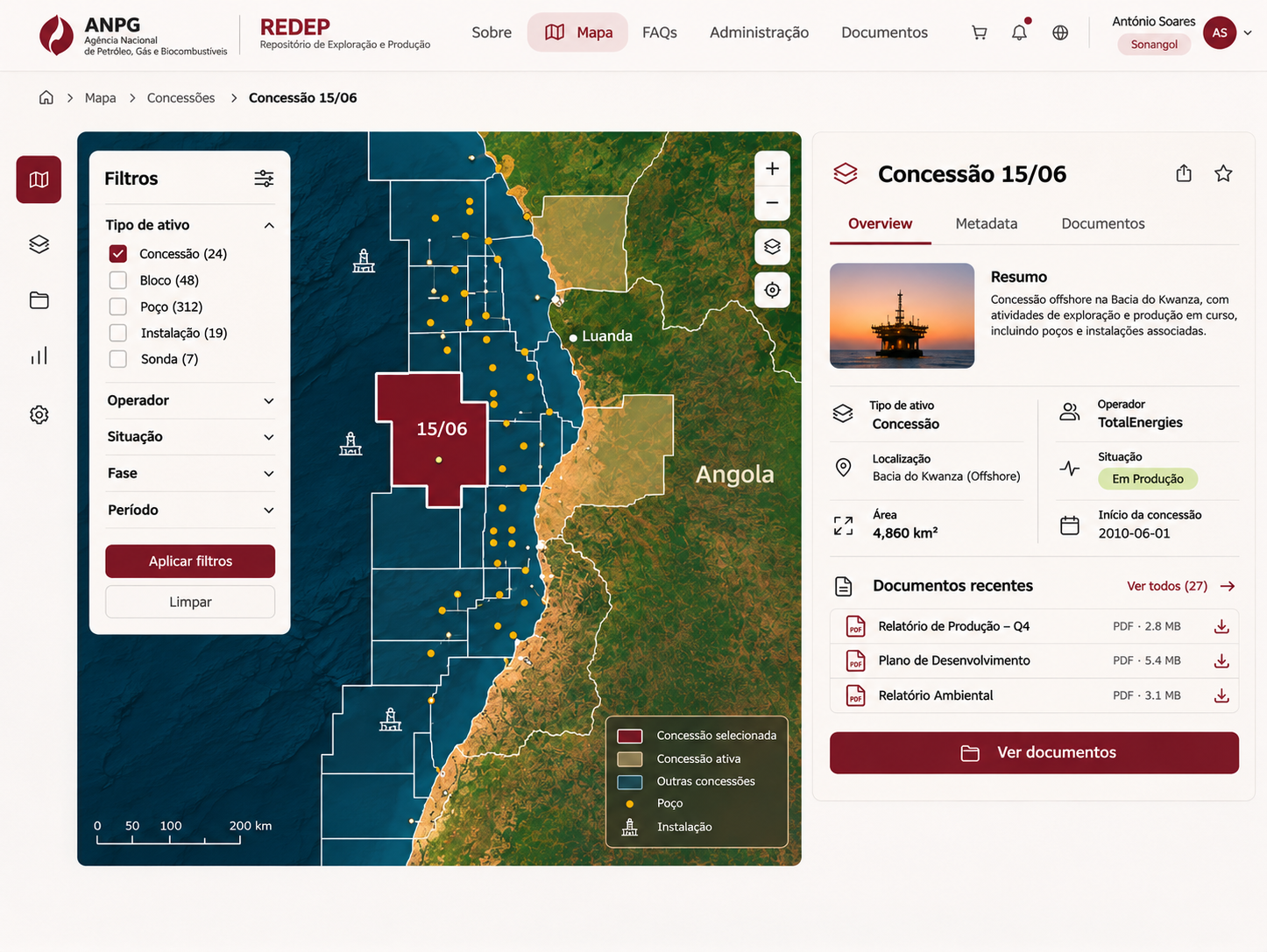
I explored a map-first experience that made location the starting point for discovering assets.
Users could identify concessions and wells visually, narrow their search using filters and access related information through structured asset views.
Design Decisions
01
Discover visually
An interactive map provides geographic context and helps users understand where assets are located.
02
Preview before navigating
Quick asset previews reveal essential information before users move into detailed records.
03
Connect assets with documents
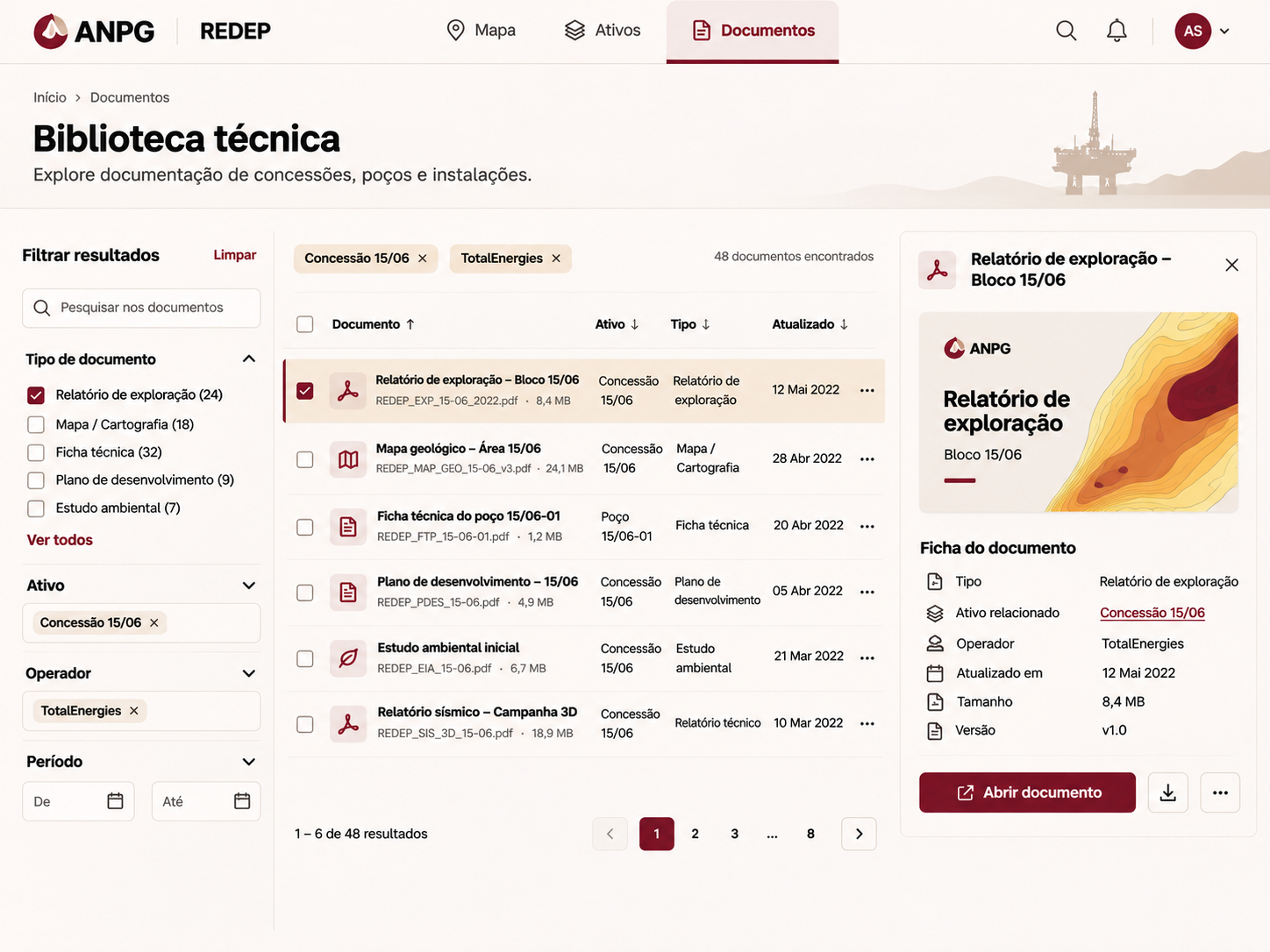
Search, filtering and document organisation complement the map, helping users move from geographic discovery to technical information.
From Wireframes to Interface
Structure first. Visual refinement second.
I explored login, data-listing and map interfaces through wireframes before developing the high-fidelity experience.
These layouts helped establish how navigation, search, filtering and detailed records could work together.

Exploring the Asset Experience
From a point on the map to useful information.
A selected asset becomes an entry point into its technical context: identification, location, associated information and supporting records.
Document Discovery
Making technical information easier to locate.
Beyond geographic browsing, a structured document library can support specialists who already know which records they need.
Filters, document previews and asset relationships offer complementary paths to the same information.
Visual Language
A consistent interface for complex workflows.
Palette
Burgundy
#6B1F2A
Sand
#F1E6D3
Ink
#1A1A1A
Paper
#FAFAF7
Typography
Sora · Display
Manrope · Body 18
Manrope · Body 14
Numerics · 1,234.56 km²
Reusable Patterns
Design explorations, not historical production assets
Search input
Filters
Status indicators
Asset card
Block 15/06 — Agogo
Concession · Lower Congo Basin
24 documents
Document row
Well Report — AGO-2
PDF · 12.4 MB
Navigation controls
Outcome
Making complex information easier to explore.
The REDEP design connected geographic exploration with structured technical information, combining maps, asset details, search and documentation in one interface concept.
Key takeaway: The most useful navigation model reflects how people understand information, rather than simply how the database stores it.